CONTACT
Since the 2026/27 Bluetongue Virus (BTV) season started on the 1st of July, BTV-3 has been detected on a growing number of farms throughout Great Britain, with a significant hot spot of cases located in Somerset, Devon and Cornwall.
The spread of the disease serves as a timely reminder that farmers should remain vigilant to the clinical signs of infection and take action to protect their livestock.
Vigilance
Bluetongue is spread by Culicoides biting midges. These insects act as vectors, carrying the virus from one infected animal to another when feeding. Clinical signs can vary depending on the species and severity of infection but commonly include fever, swelling of the mouth, tongue and head, excessive salivation, nasal discharge, lameness and sores around the mouth or feet. Importantly, the virus cannot be transmitted directly between livestock through nose to nose contact.
However, it can be passed from infected mothers to their unborn offspring during pregnancy and through infected semen and embryos. Another significant route of spread is through the movement of infected animals. If infected livestock are moved into a previously unaffected area, local midges can acquire the virus and go on to infect other animals, increasing the risk of further outbreaks.
Bluetongue is a notifiable disease. It’s important that you know what to look out for and if you do suspect infection, call your vet or APHA on 0300 303 8268 immediately.
| Clinical signs of infection | ||
| In sheep: | In cattle: | In calves: |
|
Cattle do not often show clear signs of disease so owners should also look out for signs of fatigue and lower productivity including reduced milk yield. |
Calves can become infected with bluetongue before birth if the mother is infected while pregnant. Signs of infection include:
Livestock keepers should consider bluetongue as a possible cause for calves showing these signs. |
Vaccination
Vaccination remains the most effective tool available to protect livestock against Bluetongue and is believed to have substantially aided the management of BTV infection across Europe. Demand for vaccines in GB is strong, especially following a surge in cases reported in early August and the FUW are aware of reported shortages and delays in acquiring doses.
Despite this, the FUW have been informed that manufacturers are reacting to the demand and the advice to farmers continues to be to discuss vaccination with your veterinary surgeon and ensure you understand the options available for your herd and/or flock.
Alongside vaccination, good biosecurity remains essential. It is advised to always check the risk of Bluetongue from any replacement animals before purchase to avoid unknowingly introducing the virus to an area. Careful sourcing of livestock, remaining alert for any signs of disease and following the latest guidance will all help reduce the risk of unintentionally spreading the virus.
As we move through the peak midge season, preparation is vital to reduce the risk of Bluetongue Virus overwintering and help safeguard animal health, welfare and productivity through the winter months into next spring.
Visit the Welsh Government website for more information about Bluetongue in Wales.
Cyber crime is becoming an increasingly significant threat to farming businesses across Wales, with criminals using ever more sophisticated tactics to target rural communities.
At this year’s Royal Welsh Show, the Farmers’ Union of Wales (FUW) welcomed Detective Inspector Paul Hall from the Wales Cyber Resilience Centre for an insightful seminar highlighting the growing risks posed by cyber crime and the practical steps farmers and rural businesses can take to protect themselves.
Watch the full discussion between FUW President Ian Rickman and Detective Inspector Paul Hall above, or read Paul Hall’s article below for expert advice on safeguarding your farming business against cyber threats.
Cyber crime: How to keep your business safe
by Detective Inspector Paul Hall, Wales Cyber Resilience Centre and South Wales Police
Cybercrime is impacting organisations across Wales. No matter the size, the business sector or location, different organisations across the country are being targeted by cyber criminals. The criminals are exposing weaknesses in security to expose vulnerabilities as a way of exploiting organisations. Cybercrime is preventable and the first step is being aware that you will be targeted.
Advancing technology is impacting and changing how businesses can operate, the farming and agriculture sector is no different. Farmers are utilising technology such as GPS mapping, soil sensors, drones and automated tractors. Utilising such technology can enhance the capabilities of the farmer, however it can present a risk especially if cyber security is not considered.
If criminals targeted a GPS guided tractor for example they could cause the tractor to work inefficiently which could result in damaged crops or misaligned planting. It is important to be aware of what technology you are using which can include home computers, phones, automated machinery and security cameras and ensuring that they are protected as these items could be what the criminal targets.
One of the main methods of attack is coming via phishing or scam emails which try to trick recipients into revealing sensitive information such as passwords or transferring funds. The criminal will pretend to be from another organisation and try to encourage the recipient to do something. Some of these emails are obvious scam emails, however the criminal is becoming more subtle and sophisticated in how they succeed.
The supply chain threat is one of the most common ways that criminals succeed. They will use a compromised email address of one of your suppliers and use that trust you have with your supplier to get you to do something. This could include stating that you have an unpaid invoice, requesting you to download something or simply telling you that their bank details have been changed and requesting you to update your payee details for them.
The advice for this is simple: contact your supplier using a trusted number and not the one on the email and double check with them. The Welsh Government and the Police led Wales Cyber Resilience Centre are currently working together to raise the awareness of the supply chain threat in order to better prepare organisations and prevent them from becoming a victim.
The vast majority of cybercrime is preventable and more often it is human error that has allowed the criminal to succeed so it is important that the human becomes the first and strongest line of defence.
Key things to focus on:
Keep your devices up to date - like any piece of machinery it needs to be regularly maintained and in order to do this you must ensure the operating system and installed software on your devices is updated. Major operating systems have a function that allows updates to be installed automatically.
Using Strong Passwords - National Cyber Security recommends using three random words as a way to remember passwords. Utilising capitals, lower case, numbers and special characters can make your password stronger. Don’t use weak passwords such as family or pets names or your place of birth. Always ensure you change default passwords such as your WI-Fi network .
Turn on Multi Factor Authentication - If your password is known because it has been stolen or guessed, MFA is another layer of security to prevent unauthorised access into your account.
Back up your data - in the future you may need access important data such as emails, invoices, contracts. It is vital that you back these items up in a separate location which will assist if you were to lose this data from your primary account.
Being aware of Phishing emails - the likelihood is that we will all receive a phishing email, however, having knowledge of what they are can prevent you from becoming a victim. One factor that a lot of victims have in common is that at the time of reading the email they were busy juggling other things and may have missed obvious signs that it was a phishing email. Anything that involves a payment or changing of bank details - phone the person or organisation to check.
The Farmers’ Union of Wales (FUW) joined forces with Eryri National Park Authority over the first weekend of the summer holidays to promote responsible dog ownership and encourage visitors to help protect livestock and wildlife while enjoying the Welsh countryside.
The awareness campaign took place at the foot of the Llanberis Path, one of the busiest routes to the summit of Yr Wyddfa and among the UK's most popular hiking trails. Representatives spoke to hundreds of visitors, reminding them of the importance of responsible dog ownership and the devastating consequences that uncontrolled dogs can have on livestock and wildlife.
The campaign highlighted the continued impact of dog attacks on farm animals, other dogs, as well as the threat posed to ground-nesting birds and other wildlife that call Eryri home.
A previous Freedom of Information request submitted by the Farmers’ Union of Wales to North Wales Police revealed that more than 80 livestock attacks were reported across the force area during 2024, underlining the scale of the issue facing farming communities.
The awareness event also coincides with the introduction of the Dogs (Protection of Livestock) (Amendment) Act 2025, which became law earlier this year. The new legislation strengthens police powers to tackle livestock worrying by allowing officers to seize and detain dogs suspected of attacking livestock. Police will also have enhanced powers to enter premises to secure evidence, including animal DNA, helping to investigate incidents more effectively and prevent future attacks.
The legislation also removed the previous £1,000 cap on fines for livestock worrying offences in Wales and England. This will allow courts to impose unlimited fines, providing a stronger deterrent against irresponsible dog ownership.
The campaign forms part of Eryri National Park Authority's 'This is My Home' initiative, which encourages visitors to respect the landscape, wildlife and farming communities that make the National Park unique. The campaign is supported by the Farmers’ Union of Wales, NFU Cymru, the Country Land and Business Association (CLA), and North Wales Police.
Simon Llewelyn Roberts, Senior Warden at Eryri National Park Authority said: "Eryri is home to internationally important wildlife, working farms and grazing livestock, all of which help make the National Park such a special place to visit.
"Responsible dog ownership plays a vital role in protecting livestock, safeguarding vulnerable ground-nesting birds and preserving this unique landscape for future generations. Simply keeping dogs under close control or preferably on a lead can make a real difference in protecting the people, animals and habitats that make Eryri so special."
Aled Morgan Hughes, Head of Communications for the Farmers’ Union of Wales said: "Every year we see a spike in devastating dog attacks on livestock during the busy summer months, as more people head into the countryside with their dogs. These incidents place a significant emotional and economic burden on farming families, with livestock suffering serious injury or death and farmers left to deal with the financial losses and lasting distress that follow.
"We warmly welcome Eryri National Park Authority's 'This is My Home' campaign and are proud to support this important initiative alongside our partners. Raising awareness is key to preventing these incidents before they happen. By simply keeping dogs on a lead and under close control around livestock, visitors can help protect farm animals and wildlife while ensuring everyone can enjoy the Welsh countryside safely and responsibly.”
During this year’s Royal Welsh Show, the Farmers' Union of Wales recorded an expert panel discussion on Bovine Viral Diarrhoea (BVD) in Wales.
The session comes at a crucial time, following the introduction of the BVD (Wales) Order 2024, which has brought new legal requirements for cattle keepers across Wales. With BVD continuing to affect herd health, productivity and farm profitability, understanding the new legislation has never been more important.
Bringing together leading experts from across the livestock, veterinary and policy sectors, the panel explores the practical implications of the new rules for the wide range of cattle farming systems in Wales. The discussion addresses common questions, explains what the legislation means in practice, and offers valuable advice to help farmers prepare for and comply with the new requirements.
The session is chaired by Alun Owen, FUW Regional Vice-President, Pentrefoelas farmer and BVD Cymru Farmer Representative, and features contributions from:
- John Griffiths – Chair of the BVD Cymru Steering Group and Head of Agricultural Research and Development at Coleg Sir Gar
- Dr Phil Thomas – Director of Ystwyth Vets and Director of the Wales Veterinary Science Centre
- Gwion Aeron – EIDCymru Lead
- Katie Davies – Partner at Knighton Livestock Market
- Richard Pizzey – Welsh Government
Whether you're looking to better understand your responsibilities under the new legislation or want to hear expert perspectives on controlling BVD in Welsh herds, this informative discussion is well worth a listen.
The Farmers' Union of Wales (FUW) enjoyed a busy and successful four days at the 2026 Royal Welsh Show, welcoming members, policymakers, industry leaders and visitors to a packed Pavilion programme that reflected the key issues shaping the future of Welsh agriculture.
From political debate and industry seminars to practical advice sessions and evening entertainment, the FUW Pavilion provided a welcoming space for meaningful discussion, giving members and visitors the opportunity to meet, network and celebrate Welsh farming throughout the week. Here’s just a taste of what we got up to!
MONDAY
Monday's programme began with a meeting between the FUW, First Minister Rhun ap Iorwerth and Cabinet Secretary for Rural Resilience and Sustainability, Llyr Gruffydd MS, where discussions focused on priorities for the agricultural sector. The meeting included the Welsh Government's announcement on multiannual funding for the Sustainable Farming Scheme (SFS), a move that was broadly welcomed by the Union.
The FUW also met with UK Government Wales Office Minister Anna McMorrin MP to discuss the UK Government's priorities for agriculture under Prime Minister Andy Burnham and the implications for Welsh farming.
Later in the day, members and visitors had the opportunity to hear directly from Llyr Gruffydd MS during a public question-and-answer session with FUW President Ian Rickman. The discussion covered a wide range of issues affecting Welsh agriculture, including bovine TB, BVD and the future direction of farming policy.
Attention then turned to the growing role of women in shaping rural policy and public life, with an engaging panel discussion featuring Anna McMorrin MP, Kate Miles of the DPJ Foundation and the FUW's Caryl Gruffydd Roberts. Arranged by Women in Public Affairs Cymru and sponsored by Grasshopper Communication, the session explored leadership, political engagement and the future of rural communities.
Monday concluded with the FUW's annual political reception, which welcomed more than 30 Members of the Senedd and Members of Parliament from across the political spectrum. Kindly sponsored by the Agricultural Industries Confederation (AIC), the reception provided an important opportunity for the Union to strengthen relationships with policymakers and continue discussions following May's Senedd election.
TUESDAY
Tuesday's programme turned the spotlight on some of the most pressing challenges facing Welsh agriculture, beginning with a wide-ranging discussion on the future of livestock farming in Wales and the importance of ensuring environmental policy supports, rather than undermines, productive agriculture.
Chaired by Councillor Wyn Evans, the panel brought together Catherine Smith, Chair of Hybu Cig Cymru (HCC); Alastair Brown, Policy and Strategy Officer at the Livestock Association; Leisia Tudor, Manager at Dunbia; Professor Prysor Williams of Bangor University; and Wyn Williams, FUW Ltd Board Farmer Director and British Wool representative. Discussions centred on the need to safeguard the future of Welsh livestock farming, including calls to support the nation's abattoir network, strengthen Welsh meat labelling, tackle the increasing risk of hill fires associated with reduced grazing, and remove barriers preventing young people from entering the industry.
The focus then shifted to digital infrastructure, with a well-attended seminar on rural connectivity bringing together representatives from Ofcom, Openreach and VodafoneThree. Joining the panel, FUW Rural Affairs Chair Alan Gardner highlighted the persistent mobile and broadband challenges faced by farming businesses and the importance of reliable connectivity for modern agriculture.
Alongside the Pavilion programme, the Union held a series of key political and stakeholder meetings throughout the day, including discussions with members of the House of Commons Welsh Affairs Committee and Environment, Food and Rural Affairs (EFRA) Committee, as well as representatives from British Wool and the National Sheep Association (NSA).
Tuesday concluded on a celebratory note as the Pavilion hosted another sell-out evening of entertainment, with popular Welsh-language band Bwncath drawing a packed crowd and bringing another memorable day at the Royal Welsh Show to a close.
WEDNESDAY
Wednesday's programme focused on herd health, with industry experts answering questions on the implementation of Phase 2 of the BVD (Wales) Order 2024 and what the new requirements mean for cattle farmers. The session provided valuable guidance on the next steps for producers as the industry continues its efforts to eradicate the disease. Those who missed the seminar will be able to catch up soon, with a recording set to be released in the near future.
Attention then turned to communications and public engagement, with a lively discussion exploring how social media is transforming the way farmers connect with consumers, share their stories and champion Welsh agriculture. Featuring popular farming content creator Cammy Wilson of The Sheep Game, Leah Meirion of Mole Valley Farmers and Welsh farmer Sara Jenkins, the panel blended humour with practical insight, delivering an honest and thought-provoking discussion on the opportunities and challenges social media presents for the future of farming.
Wednesday also marked the first meetings between the FUW and newly appointed Welsh Government Ministers Anna Brychan and Mark Hooper. The discussions provided an early opportunity to underline the central role farming plays in sustaining the Welsh language, while also highlighting the importance of improving rural transport links to support farming communities and the wider rural economy.
For the first time, the Farmers' Union of Wales was also delighted to host the annual Welsh Agricultural College (WAC) alumni gathering at the Pavilion, bringing together former students and friends for an afternoon of reminiscing and networking..
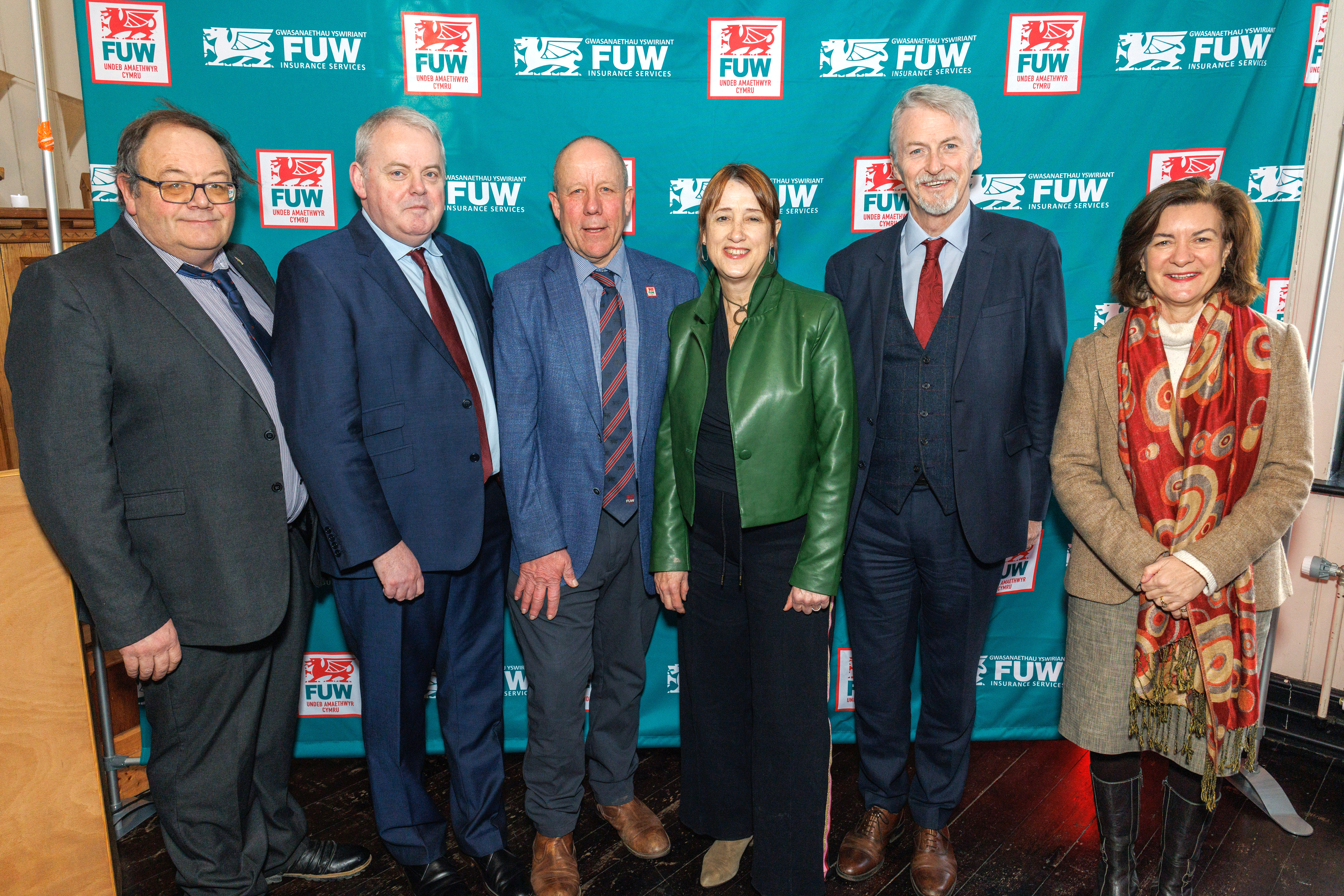
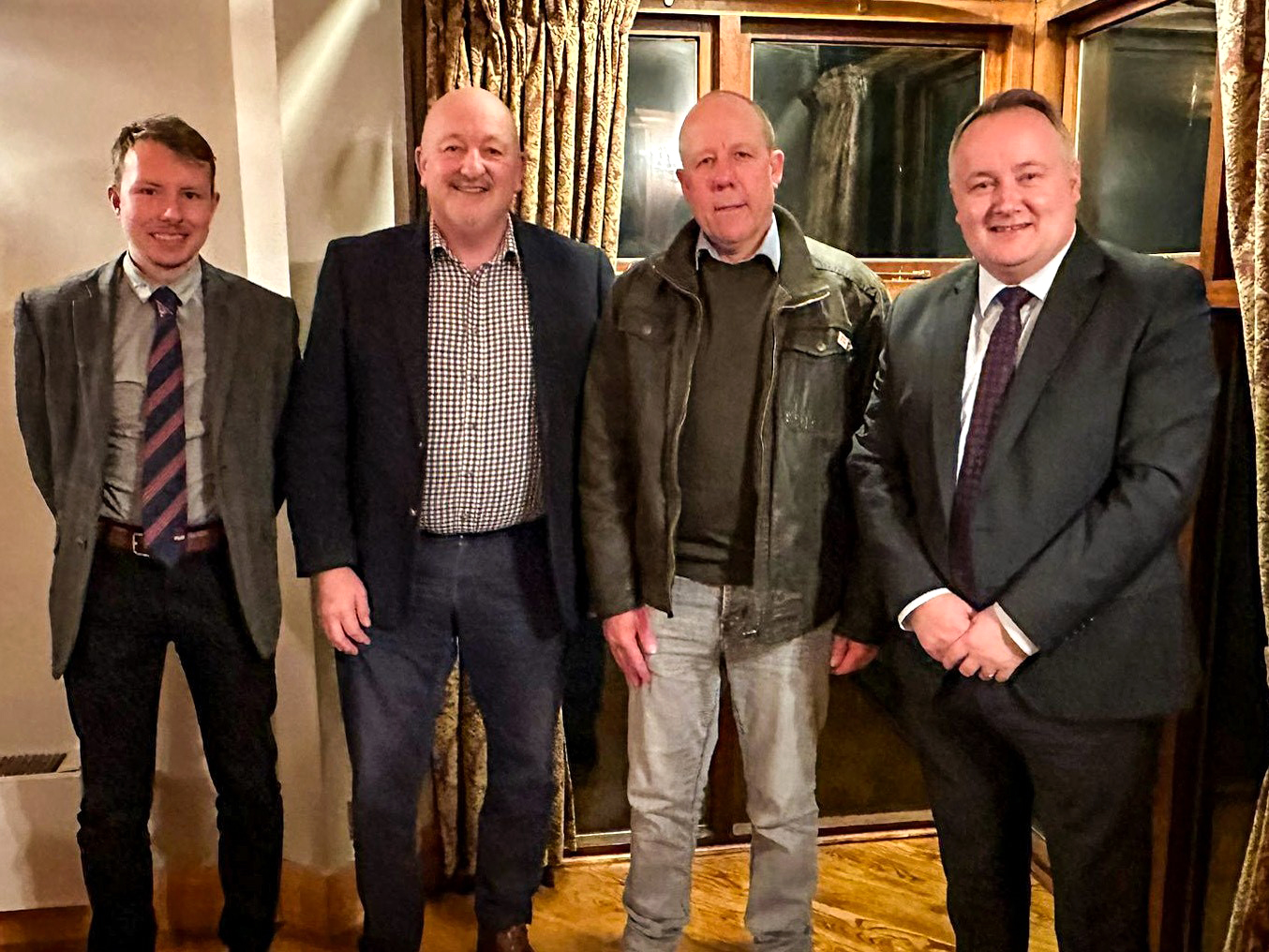
The day concluded with the annual FUW President's Reception, welcoming key stakeholders, political representatives and friends of the Union. During the evening, Tir Dewi and Prostate Cymru were announced as the FUW President's Charities for 2026–2029, while Darren Williams, Elwen Roberts and Nia Thomas were recognised for their outstanding contributions to Welsh agriculture and the wider rural community.
THURSDAY
The final day of the Show concluded with practical advice for farming businesses, as Paul Hall, Head of Cyber and Innovation at Cyber Resilience Centre for Wales highlighted the growing threat of online crime and offered guidance on protecting farm businesses, finances and personal information in an increasingly digital world. Keep an eye out for the recording!
To conclude a busy week, FUW President - and avid Scarlets fan - Ian Rickman, was delighted to welcome some of the players and coaching staff on their annual visit to the Showground!
DIOLCH!
Across the four days, the FUW held thousands of conversations with members and visitors, while meeting with more than 50 politicians and dozens of key stakeholders and policymakers. Together, those discussions reinforced the Royal Welsh Show's unique role in bringing the farming community, government and the wider rural sector together to celebrate and shape the future of Welsh agriculture. Diolch to everyone who called by and made the week possible.
- Farmers’ Union of Wales Announces Tir Dewi and Prostate Cymru as President’s Charities
- Darren Williams honoured with Farmers' Union of Wales Internal Award
- Elwen Roberts honoured with FUW External Award for Services to Agriculture
- Prominent journalist Nia Thomas receives FUW Bob Davies Memorial Award